

 อ่านภาษาไทย
If you have the opportunity to stroll through the old city area near Khlong Lod, close to the Chao Pho Suea Shrine, you will find a uniquely shaped wooden bridge with a distinctive tall wooden structure. This bridge is called "Saphan Hok," a historical site full of stories. The name "Saphan Hok" comes from the bridge's ability to "hok" or tilt up and down, allowing large boats to pass through the canal in the past. It is considered an interesting example of wisdom and the adaptation of Western culture in Siam.
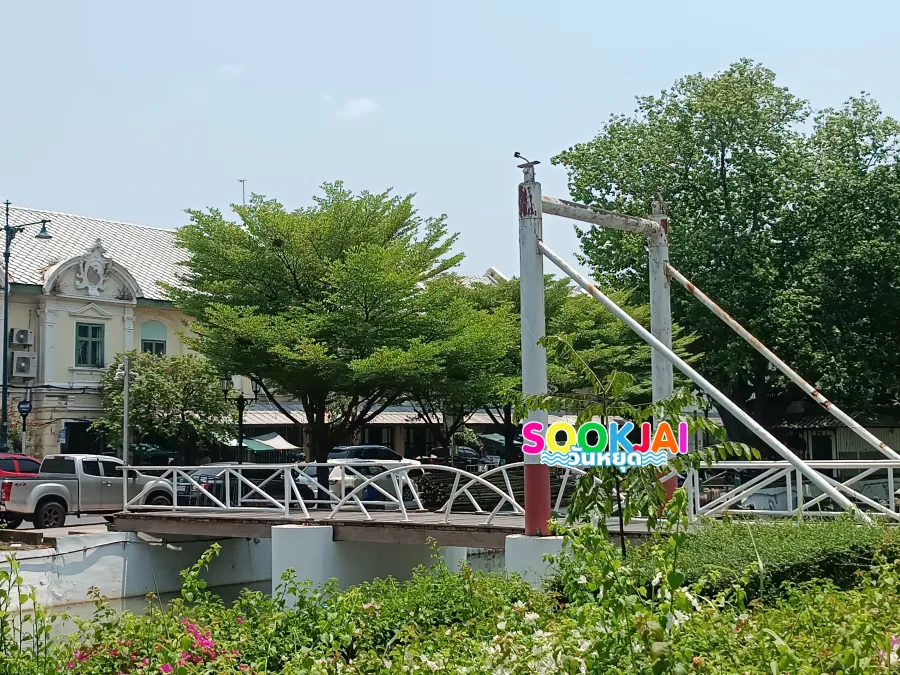
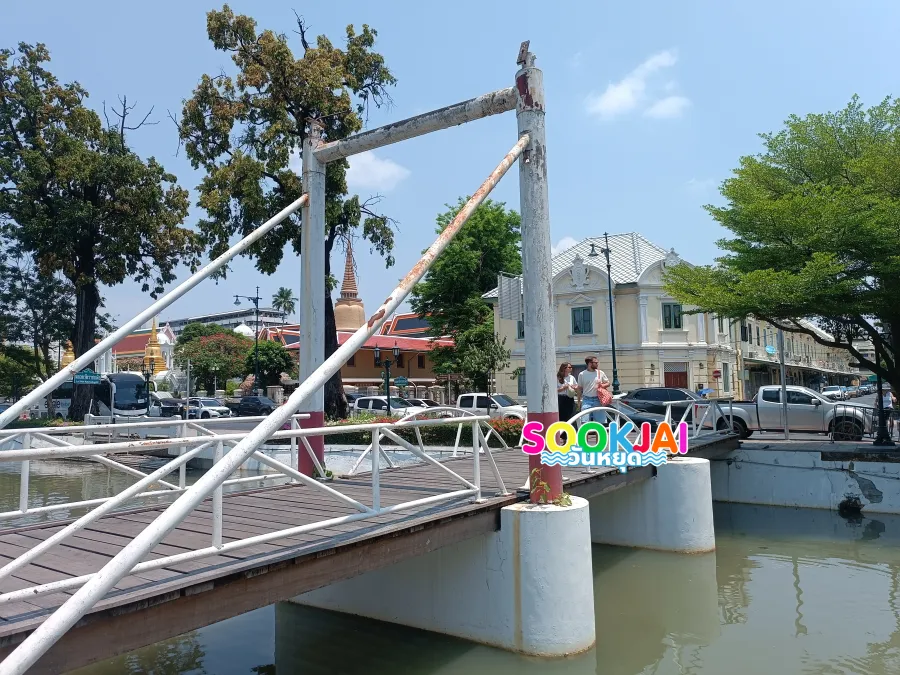
The origin of Saphan Hok dates back to the reign of King Chulalongkorn (Rama V), who ordered the construction of the bridge in the "Dutch" (Netherlands) style. In the past, Bangkok had several bridges of this type, but as time passed and land transportation replaced water transport, most of the Saphan Hok bridges were demolished or converted into concrete bridges. Only this Saphan Hok remains, having been renovated in its original style in 1982 to commemorate the 200th anniversary of Rattanakosin, as a memorial for future generations to admire.
Today, Saphan Hok has become a popular check-in point for tourists and photographers due to its unique beauty of wood and black steel structure, contrasting with the peaceful atmosphere along the canal, giving a vintage feel as if stepping back into the past. Around the bridge, there is a clean walkway along Khlong Lod, perfect for an evening stroll. It can also be used as a connecting point to other important places such as Wat Ratchabophit or Saranrom Park, easily accessible within walking distance.
Visiting Saphan Hok on a holiday is not just about taking beautiful photos for social media, but also about experiencing a living piece of history in the heart of the capital. If you are fascinated by old neighborhoods and architecture with stories, Sookjai Wan Yut website recommends checking in at Saphan Hok. We guarantee you will see new perspectives of Bangkok that are both beautiful and valuable.