

 อ่านภาษาไทย
This time traveling in Lopburi, "Sookjai Weekend" heads straight to the Talat Lang community, not far from the upper market of the city. But it seems to be a market before the upper market, because it is said to be a riverside market since the Ayutthaya period. But Talat Lang is another hundred-year-old market that people don't often visit.
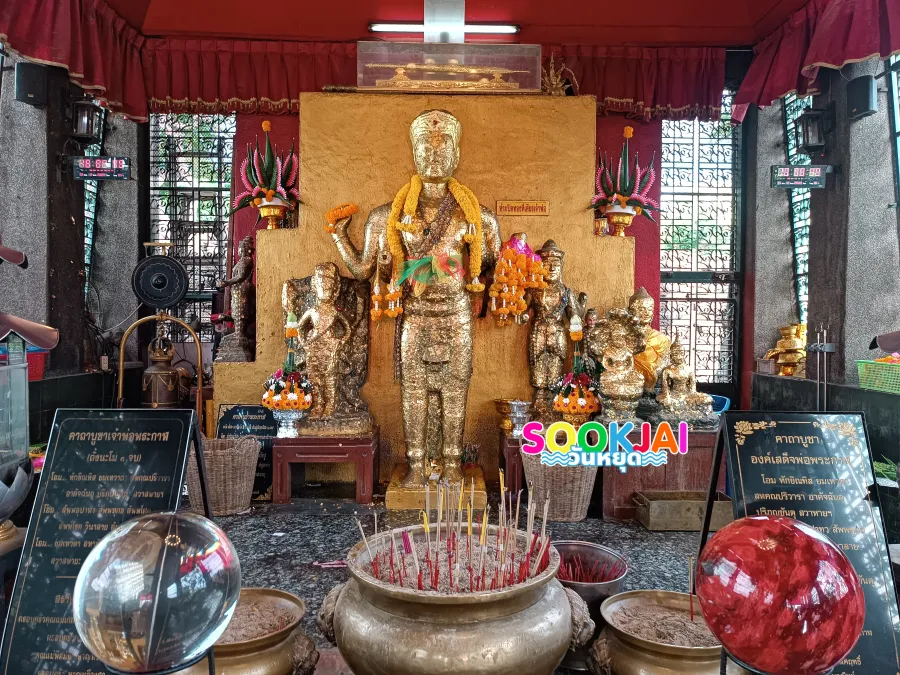
Luk Sorn Shrine (Arrow Shrine)

Do you believe that at the Luk Sorn Shrine, a sacred shrine in this community, there is a stone that is believed to be the arrow of Rama? This stone must be watered all the time, because if the water dries up, a fire will burn down the Talat Lang community. Whether it's true or not, the Talat Lang community has already been burned down once. This kind of belief is interesting because the Arrow of Brahma from the Ramayana of India is in a Chinese shrine.
Yellow Building, Siwasathan Building, Talat Lang

Along this old market road, there are many unique wooden houses and old buildings. The most prominent is the Yellow Building. The owner of the house secretly told Sookjai Weekend that it is the second brick house in the Talat Lang community. And confirmed that this house is really more than a hundred years old. Everything is beautiful, including the vents and stucco patterns. The owner of the house said that they had found a wooden block for casting stucco patterns to decorate the beams and walls. It is still kept even though it is no longer used.


In the past, the backyard was a wide area by the Lopburi River. In the dry season, you could walk across the water to Wat Manee Chonlakhan, which became a playground for children. During the flood season, it was still fun because the flood coincided with the Loy Krathong festival.


The first building in this market is called the "Red Building", and next to it is a similar house, which is the Siwasathan Building (Si-wa-sathan, not Siu-sathan). The third brick house in the community, built as a four-room commercial building like the Yellow Building, differs only in the vents and stucco. The owner of the Yellow Building believes that it was probably the same craftsman.

In addition to the old buildings, old wooden houses with folding doors, there are also strangely shaped brick houses that are now a grocery store. Someone provided information online (a Lopburi person living near Talat Lang) that it used to be a restaurant.
Pleng Pharmacy


Arriving at Thep Prasert Osot Pharmacy or Pleng Pharmacy, a Chinese herbal medicine store that is still in perfect condition. It is still a traditional wooden house. Inside the store, there are drawers for storing all kinds of herbs. The wooden cabinets and glass cabinets displaying the medicine have also been passed down from the past. Looking into the back of the store, it is still full of sacks of various herbs. And walking past the front of the store, the smell of herbal medicine is still as fragrant as in the past.

For this Talat Lang community, Sookjai Weekend assumes that in the past it was a small trading community since the Ayutthaya period because it was in a good location by the Lopburi River. Later, the railway was built in the reign of King Rama V. The community around the railway became more important because it was a transportation hub, so it developed into the upper market of the city and later expanded to collide with the Talat Lang. Talat Lang gradually became less important as the city of Lopburi expanded towards Sa Kaeo roundabout, Phra Narai roundabout, and Tha Sala. Talat Lang is located in the old city area, where the ancient Wang Temple is located, so it does not look modern and has lost its central role. The economic downturn has caused the brick and concrete houses not to be renovated or changed, so the past image of Lopburi remains until now.
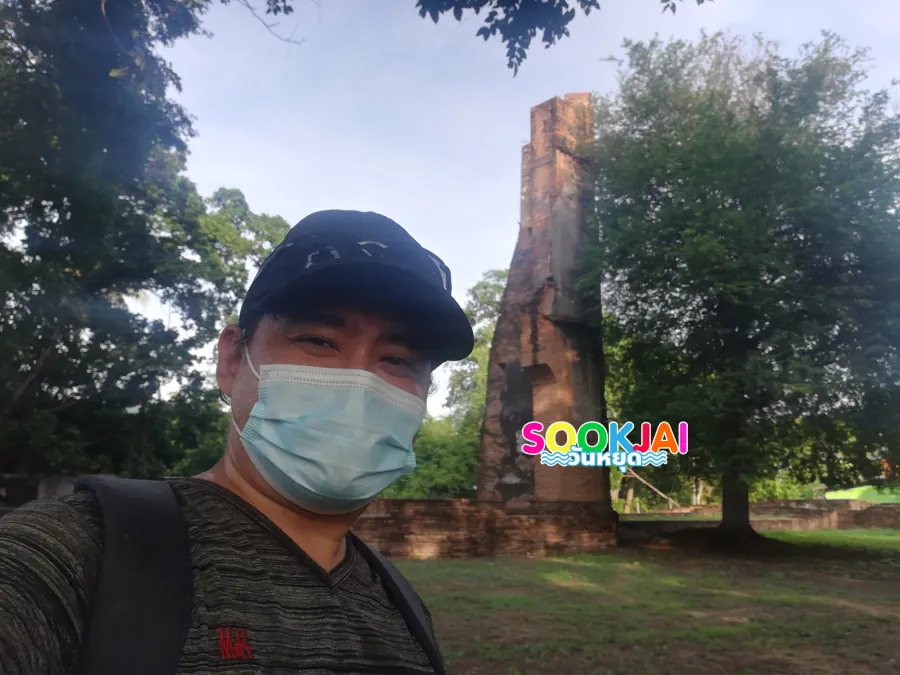
Passing through Mueang Lopburi District, don't forget to walk and take selfies at Talat Lang, an old hundred-year-old market that is not yet well known.