

 อ่านภาษาไทย
Travel Ayutthaya Inter City with Sookjai Weekend by Sawasdee Online Publishing House, a Great Kingdom in the Past, 417 Years of Fighting and Trading, with Intertwined Relationships of People of Many Nationalities and Languages. Although it is in the past when it was burned and destroyed by the Burmese, there are still traces left for later generations to travel and learn, especially the traces of foreign communities that existed in abundance in Ayutthaya, whether it is the Dutch Trading Station community, the Japanese Village, or the Portuguese Village, which Sookjai Weekend will take you on a journey to understand the history of foreign communities in Ayutthaya.
Dutch Trading Station

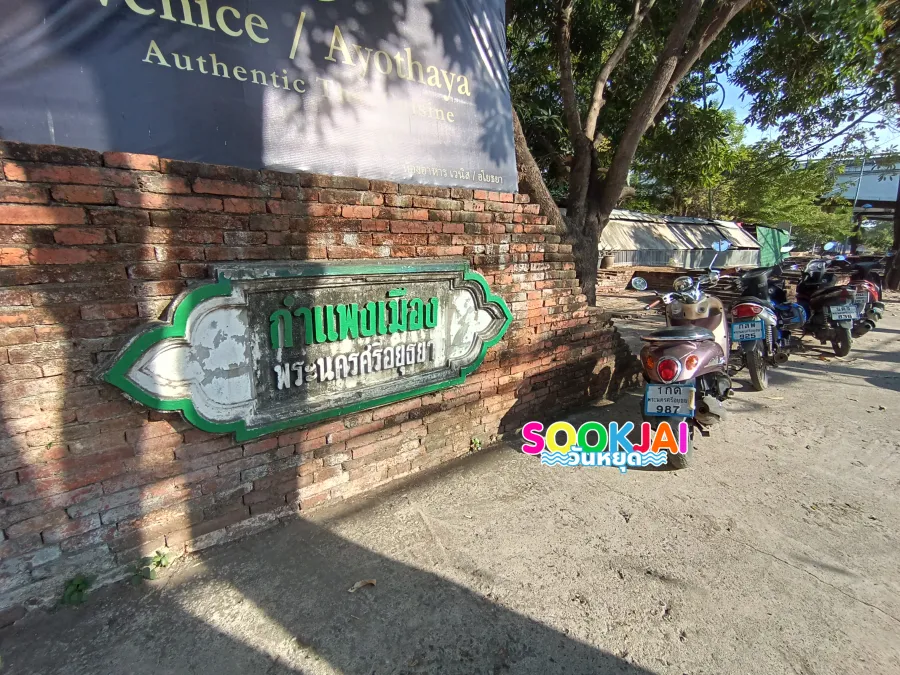
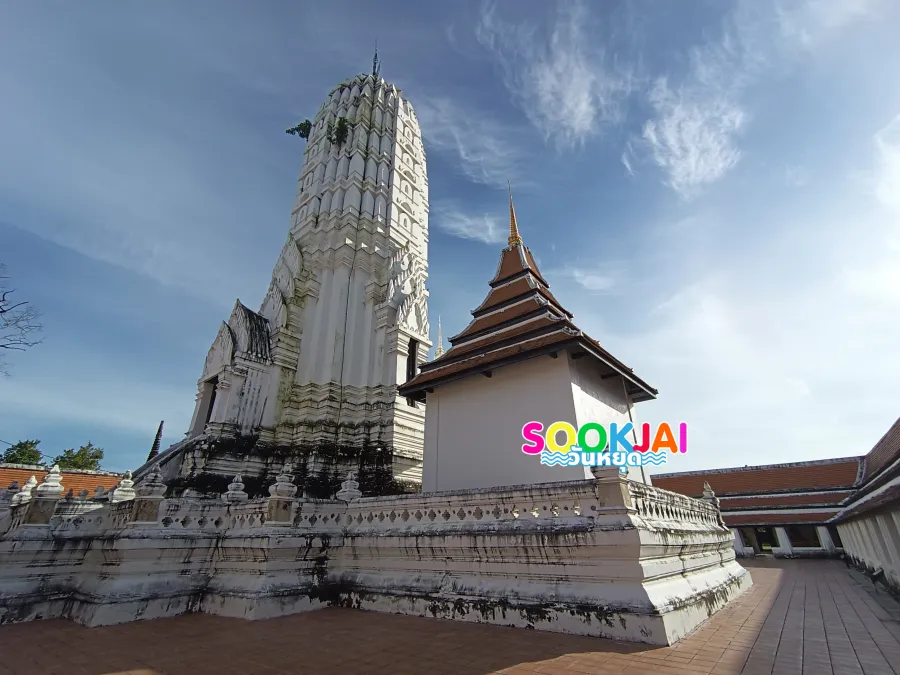
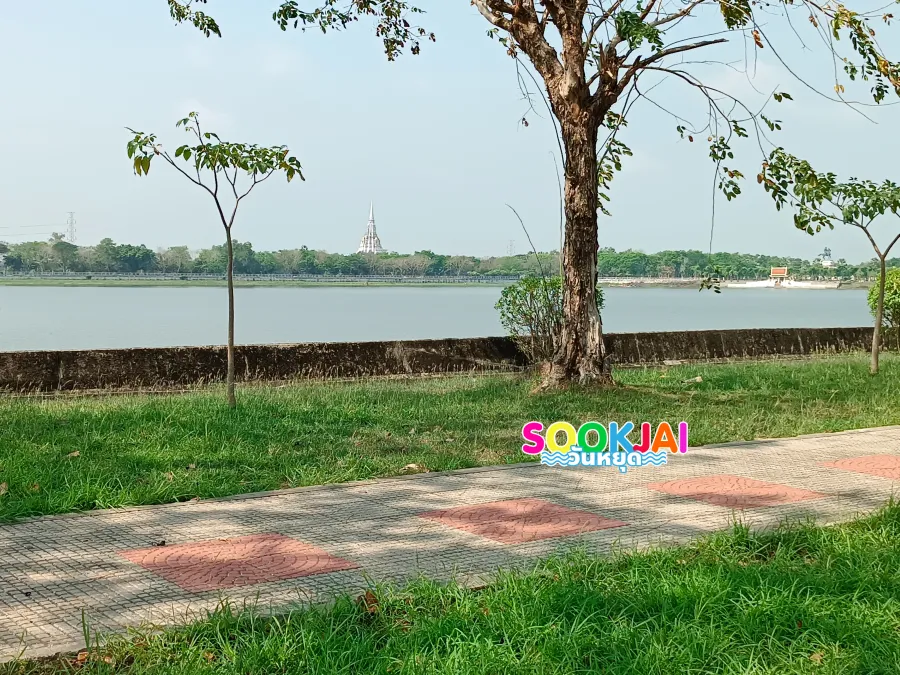
First, let's understand that all these villages are located in the south of Ayutthaya Island. If starting from observing the pagoda of Wat Yai Chaimongkol as a landmark, go straight to the Chao Phraya River. The entrance to the Dutch Trading Station is in the vicinity of Wat Phanan Choeng. It may be a bit of a mysterious entrance. If you can't find it, try asking people around there because even the signs are confusing. Let's say that if you see a small wooden shipyard, you are on the right track.


Before I tell you, the Dutch Trading Station or the Dutch colony today has only a small foundation of brick buildings left. However, a new building has been built for exhibitions. The stories in the exhibition building will tell the stories of the Dutch community (you can call it the Netherlands, Dutch, or Holland). The new building is a two-story building, beautifully colored, located around the Chao Phraya River, with good air and a refreshing breeze.

What is surprising is that the Netherlands of the Dutch is a land located 4 meters below sea level, but the Dutch in the past were the masters of the great maritime trade game in the Ayutthaya period. The Dutch VOC company had as many as 5,000 seagoing vessels, with nearly 1 million employees in Asia alone, transporting more than 2.5 million tons of goods to various countries around the world. The most important goods at that time were tin, Chinese tea, spices, and others.
As the old Dutch proverb says, "What comes from the farthest land is the best."


Before the Dutch first contacted Ayutthaya for trade, it was already in the reign of King Naresuan the Great (much later than the Portuguese). At first, the Dutch intended to follow the junk ships from Ayutthaya to China, hoping to open the largest trading market in Asia. However, due to the international society of Ayutthaya, King Ekathotsarot allowed the Dutch to establish their first trading station in Ayutthaya (currently, it is not known where it is located). Later, in the reign of King Prasat Thong, a large plot of land was granted to the VOC company, and it was ordered to establish a permanent trading station in return for providing military assistance during the dispute with the Pattani state.

The number of residents in this Dutch colony was not small, but it was a community with as many as 1,500 members. There was also a market for trading within the community, so it became a large community in the south of Ayutthaya. There was the main building of the trading station and accommodation for various officials, warehouses, liquor rooms, kitchens, blacksmith shops, stables, animal pens, and even a cemetery.
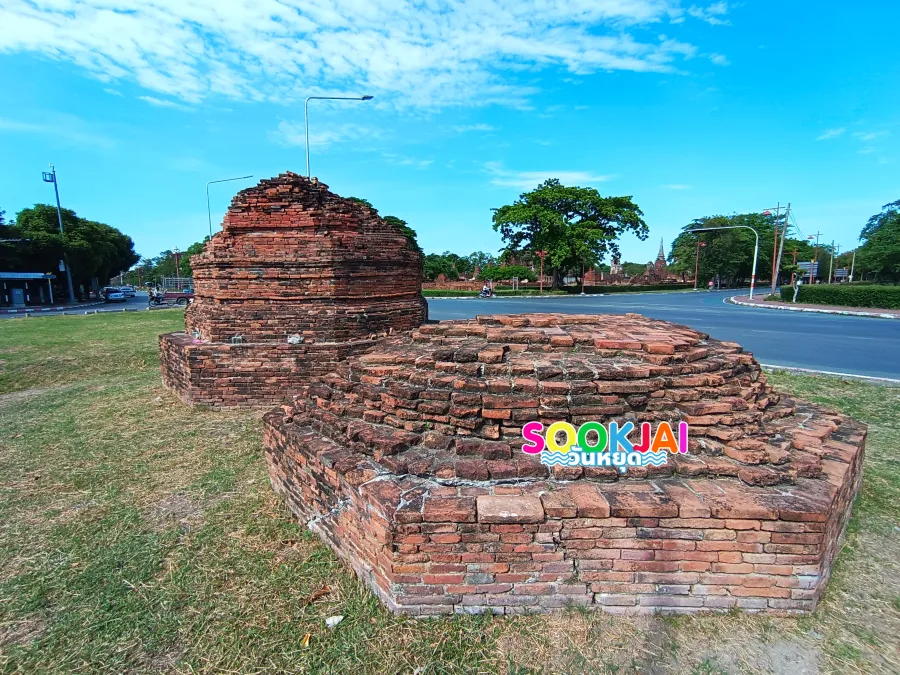
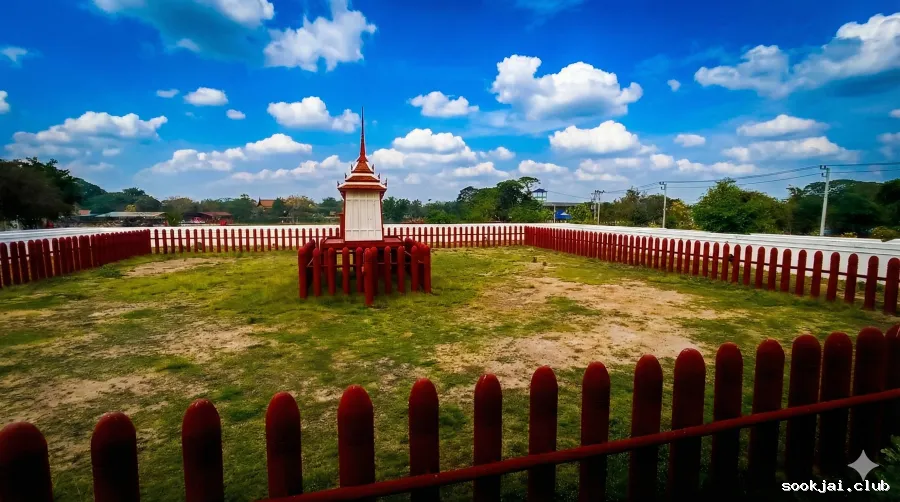
Currently, only one trace of the Dutch trading station building remains, with a brass sign indicating that it was the location of the Dutch East India Company.

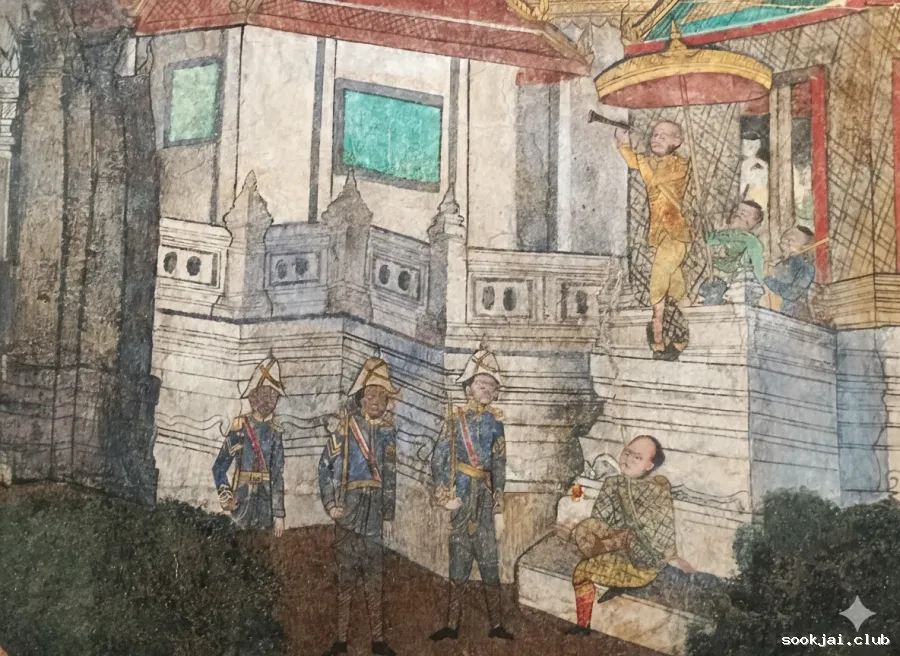
"When in Rome, do as the Romans do." This proverb has always been valid. In addition to bringing new sciences to Siam, the VOC people also played a significant role in the Ayutthaya court, especially in providing skilled craftsmen, such as goldsmiths, or bringing medicine from foreign countries to Ayutthaya. The transportation of hundreds of horses that the King ordered from Java, as well as the group of monks who traveled to restore Buddhism in Sri Lanka, all relied on traveling with the VOC ships. In addition, the Dutch company also allowed the court or nobles to try out various modern equipment.
Around 1765, the Burmese army seized Bangkok and moved closer to the Dutch trading station. The station manager at that time decided to evacuate people to Batavia. It was not until after 1767 that news was received that Ayutthaya had been burned to ashes and could no longer be restored.
Japanese Village


For the Japanese Village, you have to travel from Wat Phanan Choeng along the Chao Phraya River until you almost reach the Ayothaya Bridge. There will be a large entrance indicating that it is the Japanese Village. Turn in and buy tickets to enter. It has changed a lot now. There are many beautiful corners added for selfies. There is a Zen garden to sit and relax. This village is located next to the Chao Phraya River as well. When you come, don't forget to sit in the cafe and order a matcha latte to drink. Where can you drink green tea as good as drinking it in the Japanese Village? Authentic delicious green tea is guaranteed. If it's not delicious, I don't know where else to drink it.
Japanese people began trading with Ayutthaya in the reign of King Maha Thammaracha (before the reign of King Naresuan the Great, so it was one reign before the Dutch), but they first established a community in the reign of King Naresuan, just like the Dutch. In its heyday, there were about 1,000-1,500 Japanese people in the village, about the same.

When King Prasat Thong became the king of Ayutthaya, he appointed the head of the Japanese volunteer regiment and the head of the Japanese village, Yamada Nagamasa or Okya Sena Phimuk, to be the governor of Nakhon Si Thammarat to suppress the rebellion in the southern city. After that, King Prasat Thong burned and destroyed the Japanese village in Ayutthaya, and the Japanese had already evacuated.

Nagamasa was a native of Nagoya, born in the Edo period. He traveled to Taiwan with a Japanese junk ship and continued to Ayutthaya in the reign of King Songtham. He was appointed as the head of the village, became the head of the Japanese volunteer regiment, with a fief of one thousand, and had 800 professional soldiers under his command. In addition, Nagamasa was also a middleman, sending goods from Ayutthaya to sell abroad. After being appointed as the governor of Nakhon Si Thammarat, he died within that year.

Anyone who travels to Lopburi often or likes to watch the drama "Love Destiny" is probably familiar with the name Constantine Phaulkon or Okya Wichayen, the Minister of Foreign Affairs in the reign of King Narai, the husband of Thao Thong Keep Ma or Marie Guimar de Pinha, a Portuguese-Japanese half-breed who is famous for initiating various desserts such as Thong Yip, Thong Yod, and Foi Thong. The Japanese Village also has an exhibition in this section because it is considered that Thao Thong Keep Ma is a descendant of the Japanese in Ayutthaya as well.
Portuguese Village

For the Portuguese Village, you have to travel along the river a little further. When you see a junction, turn right and cross the Ayothaya Bridge to the other side. If you draw a line from the Japanese Village side, it is almost opposite, only separated by the Chao Phraya River.
The Portuguese were the first Westerners to contact Ayutthaya, since the reign of King Ramathibodi II. They became volunteer soldiers to help fight in the Chiang Kran War. Later, King Chairachathirat granted land to establish a Portuguese community and allowed them to practice their religion freely, becoming the largest Western community in Ayutthaya. There were no less than 2,000-3,000 Portuguese residents, who were volunteer soldiers, shipbuilders, and business traders. Most of them were mixed-race, not pure Portuguese.

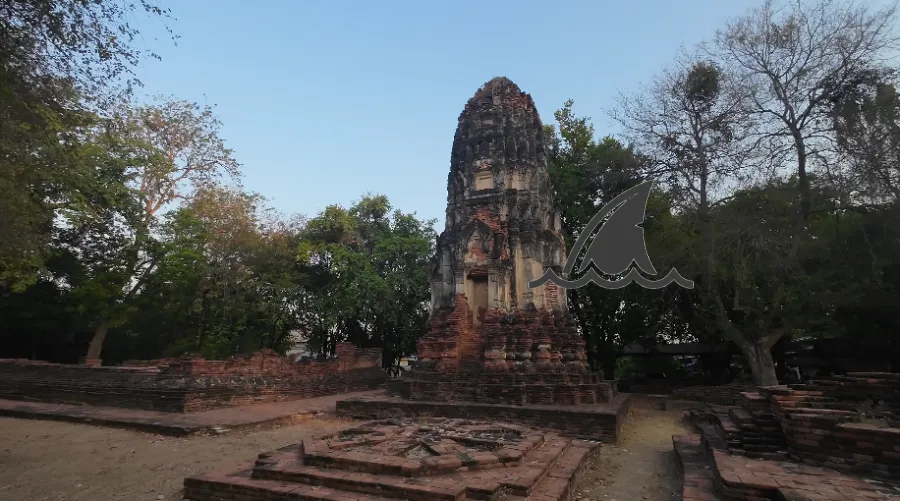
Anyone who comes to visit the Portuguese Village will probably see the building of St. Peter's Church, Dominican Order (Saint Dominic), one of the three Christian churches that used to be located in this community. When you walk inside, it doesn't look like a Christian church at all, but like a cemetery because no less than 200 skeletons were found.
The Portuguese lived peacefully in Ayutthaya until the Burmese army invaded and burned down various European villages, one of which was the Portuguese community. Burmese soldiers went around destroying Christian churches and looting property. The Portuguese village was with Ayutthaya for a long time, up to 227 years, and had to collapse together. Some of the Portuguese who fled the war joined the army with King Taksin and participated in the invasion of the Burmese army until they were able to rebuild the city successfully again.

A French priest gathered the Portuguese and traveled to establish a new community on the Thonburi-Bangkok side, becoming the Santa Cruz Church community or Kudi Chin community. There are delicious Portuguese sweets called Kudi Chin Portuguese sweets. Later, it was split off to build the Kalawar Church or Kalawario in Talat Noi.
Do you believe that in the early Ayutthaya period, the official language that the Ayutthaya nobles used to communicate with other nations, especially European foreigners, was mainly Portuguese? Priests who traveled to Ayutthaya wrote that all Ayutthaya nobles could speak Portuguese, so much so that even the French had to practice using Portuguese in order to communicate with the Ayutthaya nobles.

The arrival of the Portuguese also came with new sciences, just like other nations, such as the establishment of fortresses and the construction of strong city walls, all of which Ayutthaya got from the Portuguese. They also left cultural traces, such as language and food.
Walking around just 3 villages is tiring enough. With the internationality of Ayutthaya, to the extent that it can be called one of the central cities of the world, there are dozens of other nationalities who came to live, trade, and make a living. Because, based on the evidence, there are also villages of English, Vietnamese, Chinese, and other nationalities, but they have not been developed into tourist attractions or historical learning resources, just like these 3 villages.