

 อ่านภาษาไทย
Travel to Baan Kudeejeen, search for Phi Hua Prik, travel to Thonburi, visit the Portuguese community, eat French desserts, taste curry puffs with Sappayak filling, which nowadays have been adapted into fusion food with slightly strange names, but that's what they're really called because it's approximately Portuguese. This community by the Chao Phraya River on the Thonburi side is descended from the Portuguese village in Ayutthaya.

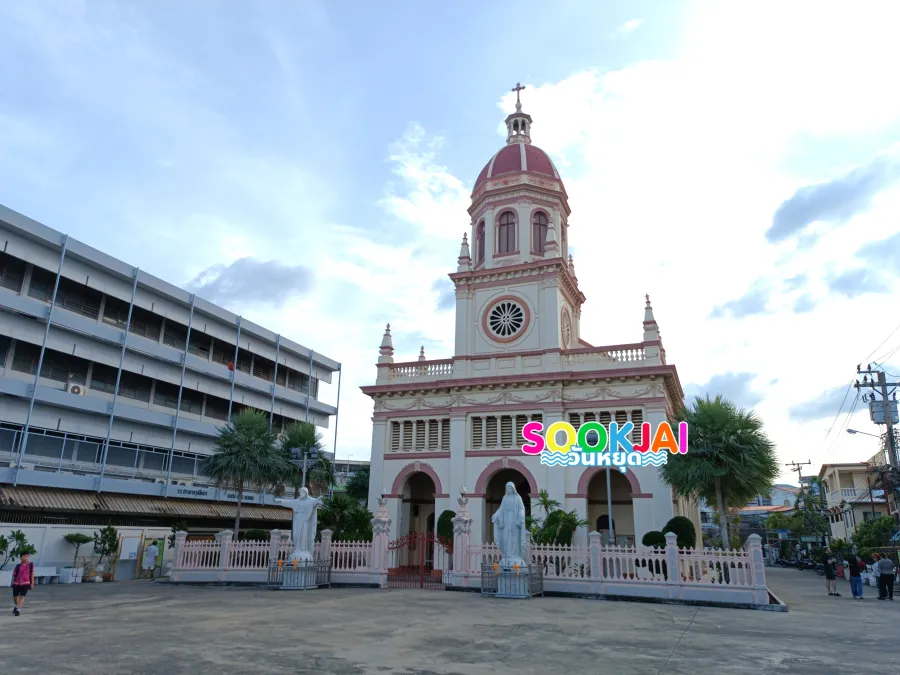
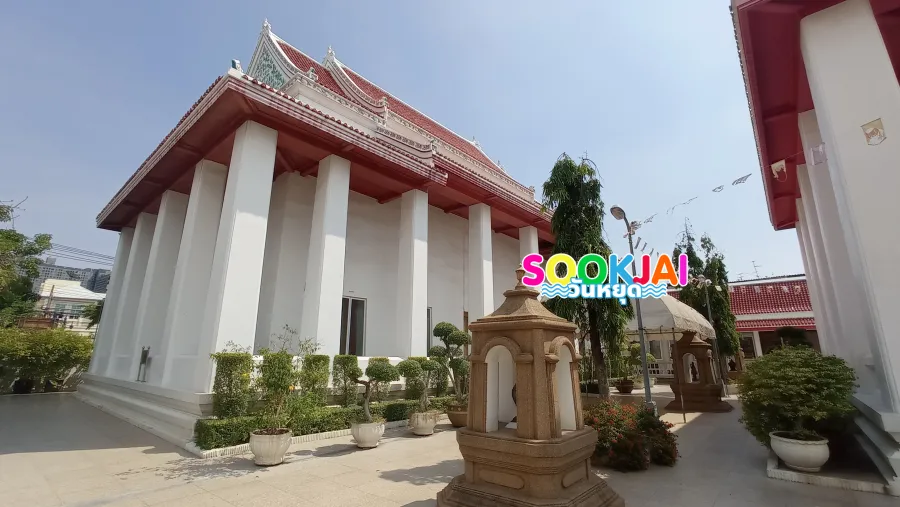
Santa Cruz Church
The community we're talking about is Kudeejeen or Kradeejeen community, which King Taksin ordered Portuguese mercenaries from the Portuguese village in Ayutthaya, who joined the fight against the Burmese army until they won and successfully established Krung Thonburi Si Maha Samut, to settle in Thonburi. Thus, the French village named "Village of Our Lady of the Rosary" was established, and Santa Cruz Church followed later, until the church became the center of the community.

It can be said that the Portuguese were the nation that made Ayutthaya want stronger city walls and fortresses. In the picture is Phet Fortress, Ayutthaya, in Bang Kacha Subdistrict.
Speaking of where these Portuguese people came from, they entered Siam (Ayutthaya) since the reign of King Ramathibodi II (early Ayutthaya) with the desire to establish a trading post in Malacca, trading pepper, spices, and others. But the city of Malacca was under the influence of the King of Ayutthaya at that time. The Portuguese used their diverse knowledge and abilities to benefit Ayutthaya, whether it was knowledge in construction, city walls, fortresses, architecture, navigation, map making, weapons production (flintlock guns), and medicine.

Model of a flintlock gun, Baan Kudeejeen Museum
King Chairacha ordered the Portuguese to settle in Ban Din Subdistrict, outside Ayutthaya, because of their great merit in joining the Chiang Krai-Chiang Kran war until they won. When fighting in Lamphun, King Chairacha was shot during the battle. A Portuguese military doctor operated and removed the bullet until he was out of danger. Later, this village had a large population of Portuguese descent, up to 3,000-4,000 people, with 3 Roman-Catholic churches of different orders (Dominican, Franciscan, Jesuit), considered one of the largest communities in Ayutthaya.

Portuguese Village, Ayutthaya
Until Ayutthaya was defeated by the Burmese army, more than 3,500 Portuguese were killed and destroyed. Some were taken as prisoners of war, and those who fled to Cambodia. Only 79 Portuguese mercenaries remained to fight alongside King Taksin.

Wichai Prasit Fort
These Portuguese continued to serve until the early Rattanakosin era. When the Bowring Treaty was signed, the Portuguese became subjects of France (called Subject at that time, meaning foreigners who, no matter what crimes they committed, would not have to go to Siamese courts), so they were no longer considered citizens of the Siamese state. Their role as government officials in various departments gradually ended, and they turned to trading in the growing areas of Bangkok, such as Bang Rak, Si Phraya, etc.

Santa Cruz Church, 1st building

Santa Cruz Church, 2nd building

Santa Cruz Church, 3rd building
Let's talk about the name Kudeejeen a little for a clear understanding. There are 2 possibilities. The first is that the name Baan Kudeejeen or Kradeejeen, Kadeejeen was called according to the architectural style of the 2nd Santa Cruz Church (in the picture above), which resembles a Chinese religious building. The other possibility is that it was called that because there is a Kian Un Keng Shrine nearby, which may have been an old Chinese shrine before the establishment of Krung Thonburi.
In the early Rattanakosin period, the word Kudee was often used before the name of a temple or religious building, possibly the same word as Kuti (monk's residence). For example, in addition to the word Kudeejeen, there is also the name of a mosque with the word Kudee in front, especially on the Thonburi side, there are both Kudee Khao and Kudee Charoen Phasn. So it is not strange if the Kian Un Keng Shrine or Temple is called Kudeejeen.
The first name of this French village in the Thonburi period was "Village of Our Lady of the Rosary", not yet called Baan Kudeejeen.

Kudeejeen French dessert
In addition to Thao Thong Keep Ma or Marie Guimar de Pinha, a Portuguese-Japanese half-breed (wife of Constantine Phaulkon or Okya Wichayen, Minister of the Port in the reign of King Narai), who is famous for initiating the making of gold desserts such as Thong Yip, Thong Yod, Foi Thong, and creating many desserts as a legacy, the Kudeejeen community also has another type of dessert that is a perfect blend of French baking and Chinese auspicious desserts, called "Kudeejeen French dessert", which is not difficult to find because the Kudeejeen people still sell French desserts. There are also other desserts that are desserts from Portuguese culture, such as Kuslang dessert and Kuaytas dessert.

Recipes in Portuguese culture, Baan Kudeejeen Museum
Another tangible legacy from Portuguese culture within this Portuguese-Ayutthaya community is food. Today, the community still cooks Portuguese food in their daily lives. The names of the recipes are strange, such as Kaeng Ngao Ngod, Pork and Beef Salmo, Sappayak (Sappayak), Tom Ma Fa or Ma Fad, Portuguese Braised Pork, including Pork Floss Fried with Pork Crackling, Roasted Pork with Potatoes, Chicken Curry Noodles, all of which are community dishes that have been passed down to the present.

Baan Sakulthong has opened as a Home Kitchen to welcome visitors with Portuguese recipes.
Let me tell you a secret that it's not hard to find because Baan Sakulthong (opposite the Baan Kudeejeen Museum) has transformed the old wooden house into a restaurant that sells at home. At least Kaeng Ngao Ngod (was named the provincial dish of Ayutthaya in 2023) and Chicken Curry Noodles are definitely available to taste.


Curry puff with Sappayak filling
Many people may be wondering what Sappayak is. It is actually an Indian-Portuguese dish made from a mixture of minced chicken, pork, or beef, stir-fried with curry paste, mixed with ground red pepper, potatoes, seasoned with vinegar, sugar, and fish sauce to taste. It can be eaten with rice or even with toast. But nowadays it's easier because it has been fused into a delicious curry puff filling that can be bought at Window Cafe, next to the Baan Kudeejeen Museum.


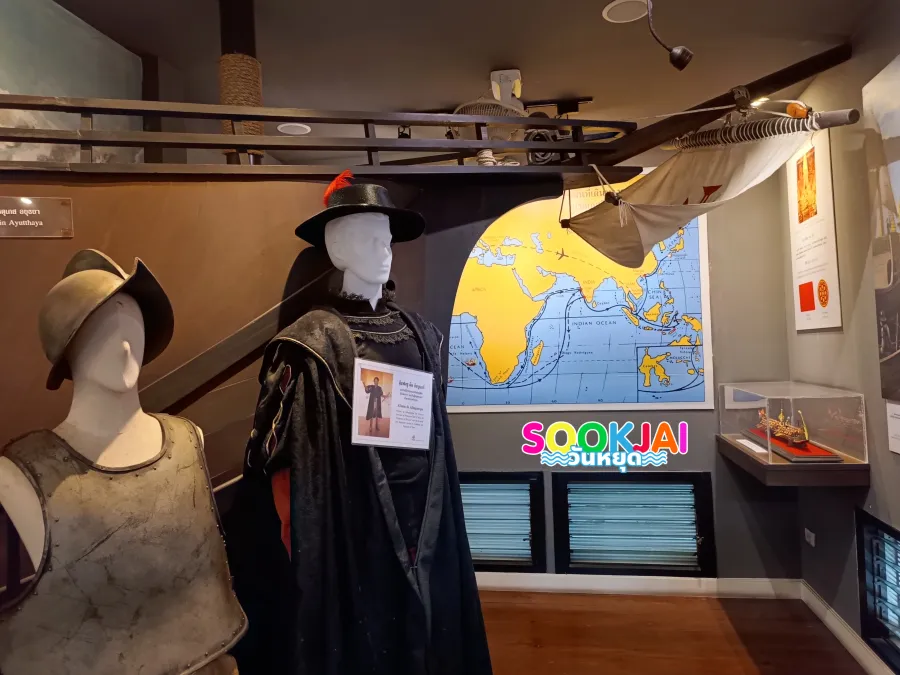
Baan Kudeejeen Museum
And don't forget to visit the coolest community museum, the Baan Kudeejeen Museum. Sookjai holiday has visited for the second time (the first time was when the house was newly opened, before Sookjai holiday was even born). Every time I come, I have to order a drink and chill downstairs, which has been converted into an open-air cafe selling many cute souvenirs, and then go up to see the museum.


Baan Kudeejeen Museum
This time I came and said wow because they presented the information in more detail than before. The exhibition also tells the story of the Portuguese people, the reasons why the Portuguese came to Ayutthaya, the development of the community, the recipes, religious beliefs, including oral stories such as Phi Hua Prik, and also displays items collected from within the community.

Phi Hua Prik
Last time I came, Phi Hua Prik or Phi Nhu Liap, the mischievous little ghost of Baan Kudeejeen, was still new. Now it has become an old collection. This is a story that adults in the community use to scare children not to go out to play outside at night, to hurry back home because they might be caught by Phi Hua Prik, in order to prevent children from falling into the water because Baan Kudeejeen is a community next to the Chao Phraya River.

For those who have ever walked along the Chao Phraya River from the front of the Municipal Office, past Santa Cruz Church to Windsor House or Khun Phra Prakob House, past Kian Un Keng Shrine to Wat Kalayanamit, you may be familiar with the Chao Phraya River walkway. But let me tell you that it has been renovated and is now very beautiful and worth visiting. Many tourists go cycling, and there are also riverside cafes open for service.

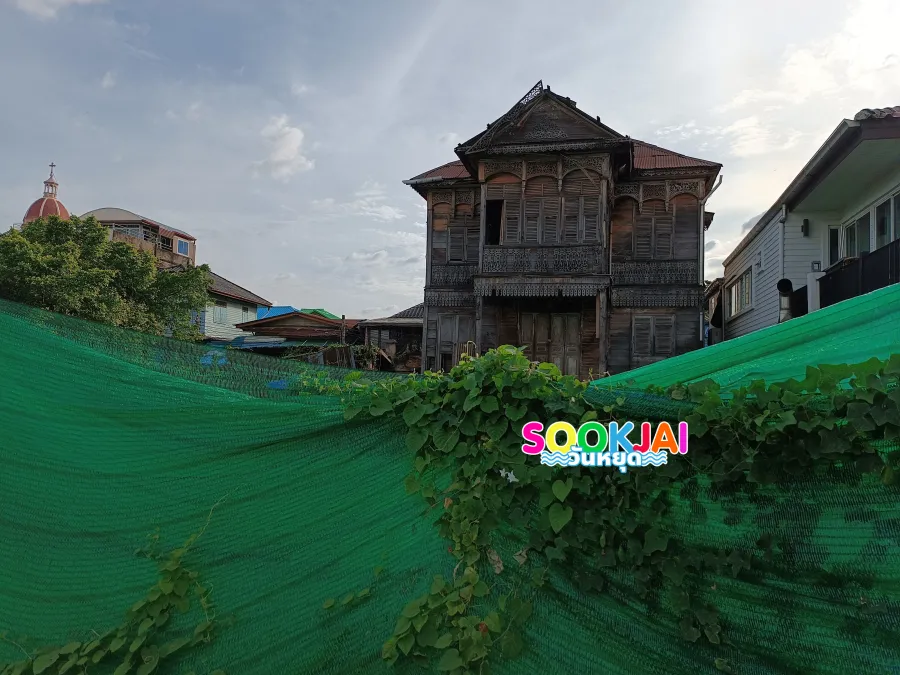
Windsor House or Khun Phra Prakob House
The old wooden house on the church land is Windsor House, now called Khun Phra Prakob House. The original owner was Mrs. Sombun Windsor, the daughter of a rice mill in Khlong Bang Luang, who married Mr. Louis Windsor, the son of Mr. Garnier Windsor, an English ship captain who founded Windsor Department Store (Four-Eyed Department Store) on Charoen Krung Road. It is one of the most beautiful gingerbread or Manila houses in Bangkok. You can walk from the pavilion in front of Santa Cruz Church, on the side next to the Chao Phraya River, and take pictures of Windsor House in the evening.


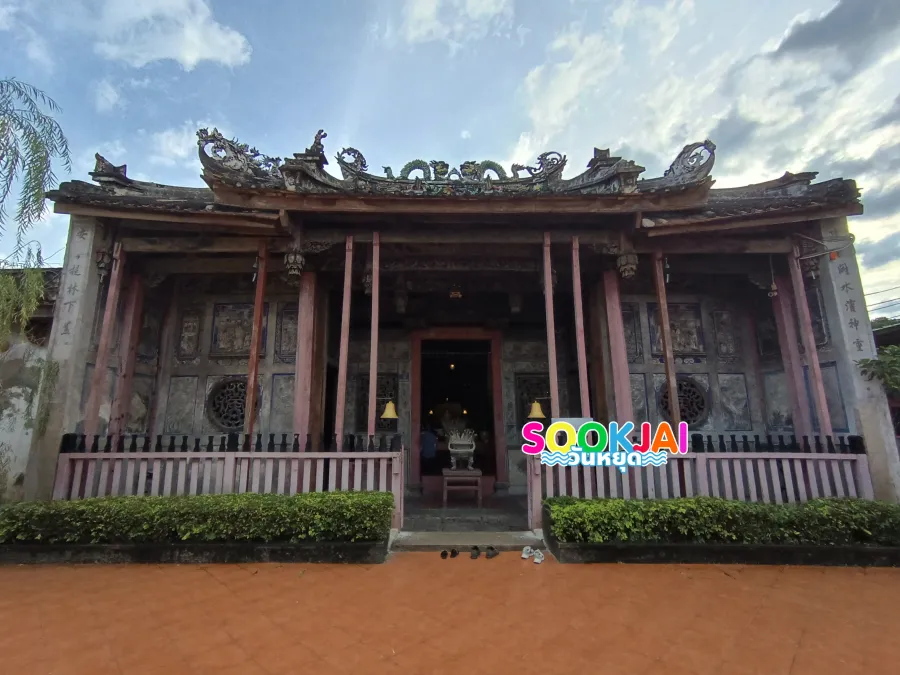
Kian Un Keng Shrine
Kian Un Keng Shrine or Kuan An Keng Shrine is now a Guan Yin shrine. People like to bring artificial pearl necklaces to offer to the goddess. It is not far from Wat Kalayanamit. It is said that Hokkien Chinese who followed King Taksin built it. Originally, there were 2 adjacent shrines (Cho Sue Kong and Guan Yu). In the reign of King Rama III, the Hokkien Chinese demolished both shrines and rebuilt them as one. This shrine received the Outstanding Architectural Conservation Award from the Association of Siamese Architects under Royal Patronage. It is currently under the care of the Sima Sathian (Sae Sim) and Tanti Vejakul (Sae Tang) families.

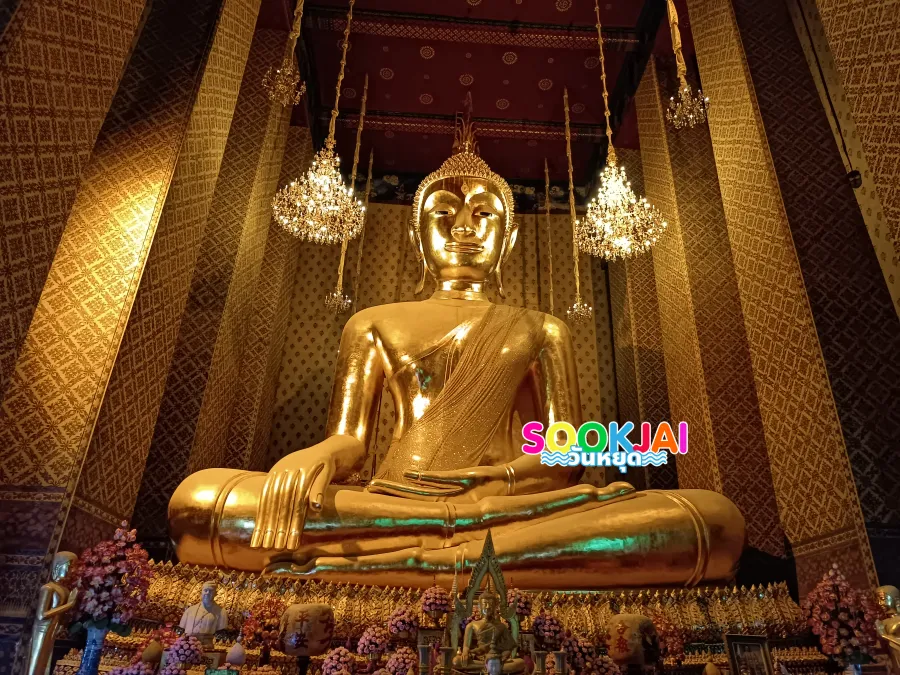
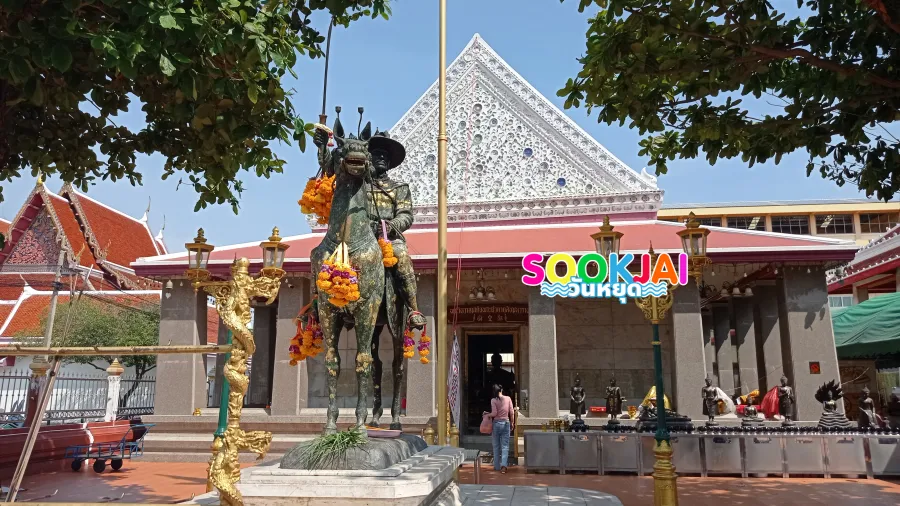
Luang Pho Wat Kalayanamit
Arriving at Wat Kalayanamit, it was just evening, and I was still in time to pay respect to Sampokong, which is Luang Pho Wat Kalayanamit or Phra Phuttha Trai Rattana Nayok, which King Nangklaochaoyuhua, King Rama III, ordered to be built, modeled after Luang Pho To or Sampokong, Wat Phanan Choeng, Phra Nakhon Si Ayutthaya Province, both in terms of craftsmanship and the size of the Buddha image. He ordered the craftsmen to replicate the style without any deviation. As for how similar the Buddha images are, Luang Pho To, Wat Phanan Choeng, has also been restored in the reign of King Mongkut, King Rama IV. For this reason, both Luang Pho have the same name, Phra Phuttha Trai Rattana Nayok.
sookjai holiday recommends a walking tour route on the Thonburi side, a single route to visit French temples, Thai temples, Chinese shrines, and also eat delicious food such as curry puffs with Sappayak filling, Kudeejeen French desserts, and visit the Portuguese community museum in Siam, as I have done content about Talat Phlu before.